
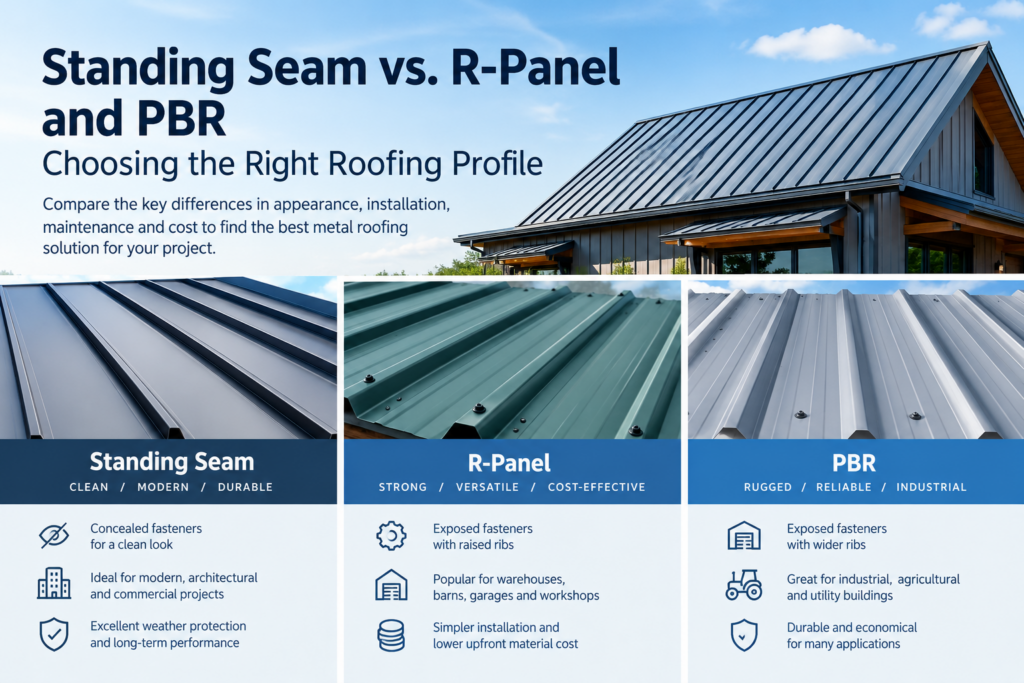
When contractors compare metal roofing profiles, the decision generally comes down to budget, appearance, and how the roof will perform through a Georgia thunderstorm. Whatever the project, choosing between standing seam and exposed fastener panels such as R-Panel and PBR requires understanding their installation requirements, maintenance needs, and suitable applications.
Standing Seam vs. R-Panel and PBR: What Sets Them Apart?
Standing seam uses long metal panels joined by raised seams with a concealed fastener system. The result is a clean appearance without visible screws.
Concealed fasteners reduce direct exposure to rain and weather and help limit potential water entry points. Standing seam is often specified for contemporary buildings, architectural projects, and commercial applications. The appearance and long-term maintenance are important considerations in these applications.
R-Panel and PBR (exposed fastener) systems take a unique approach. Their raised ribs provide structural definition, and exposed fasteners secure the panels directly to the supporting structure.
These profiles are widely used for warehouses, industrial facilities, barns, garages, and workshops. They suit traditional-style and agricultural buildings. Their simpler installation and generally lower upfront material cost make them a common choice for budget-conscious projects.
Exposed screws and washers require periodic inspection because weather exposure can affect their condition over time.
Consider Installation and Maintenance Requirements
Choosing the right metal roofing profile depends on the roof structure, slope, layout, and intended application.
Standing seam and R-Panel/PBR systems have different installation requirements. Proper installation supports the intended performance, particularly around penetrations, transitions, and roof edges.
Maintenance deserves attention. The concealed fastener design of standing seam panels reduces direct weather exposure at fastening points. In contrast, R-Panel and PBR systems might require regular inspections of screws, washers, and seals.
If you’re researching a metal roofing supplier in Atlanta, you can ask about the complete roofing system rather than focusing only on panel pricing. Comparing material specifications, accessories, and installation requirements can help contractors prepare accurate project estimates.
Match the Profile to the Building’s Design
The building’s architecture and intended applications can help narrow the options.
Standing seam offers a stylish appearance suitable for modern commercial buildings, contemporary renovations, and architectural projects. R-Panel and PBR profiles provide a pronounced industrial appearance, making them popular for warehouses, agricultural facilities, and utility structures.
Color and finish are equally important. Choose a coating and color that complement the building’s siding, trim, brick, or other exterior materials. Ask for color samples and view them in natural daylight to see how the finished roof will look.
What to Specify Before You Order
For made-to-order metal roofing solutions, confirming specifications early can help prevent material shortages, installation delays, and unexpected costs.
Before placing an order, review these essential details:
- Profile: Confirm whether the project requires standing seam, R-Panel, or PBR.
- Gauge: Choose the appropriate metal thickness based on project specifications and structural requirements.
- Coating: Review available protective finishes and their suitability for the building’s environment.
- Flashings and trim: Identify ridge caps, closures, edge trim, and other accessories required for installation.
- Fasteners or clips: Specify compatible exposed fasteners or concealed fastening clips according to the chosen system.
- Lead time: Confirm manufacturing and delivery schedules for made-to-order materials.
Minimum roof slope requirements vary by profile and manufacturer. Contractors should verify these requirements before ordering to ensure that the selected system is appropriate for the project.
Choose the Right Profile for Your Next Project
The best metal roofing profile depends on the project’s budget, architectural requirements, roof configuration, and expected maintenance needs.
Whichever profile you choose, confirm the gauge, coating, and fastening method so the system is built for Georgia weather.
When weighing options from a metal roofing supplier in Atlanta, working with a knowledgeable distributor can simplify material selection and ordering.
The BRS team can help you find the right fit. Please call BRS Roofing Supply at 470-999-9997 or request a quote for your project. Our bilingual team in Norcross, GA can review your material list in English or Spanish.
Author Bio
BRS Roofing Supply is a roofing materials distributor in Norcross, GA, supporting contractors across metro Atlanta with metal roofing, TPO systems, and technical guidance.